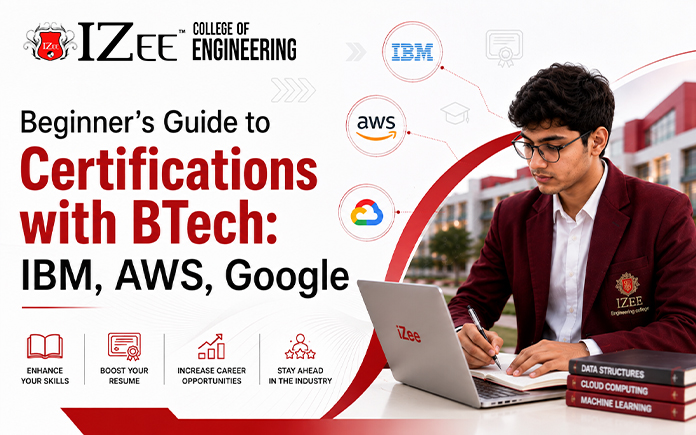
A BTech degree provides students with the theory. They have evidence that they can apply for it because they have a certification. For students studying computer science engineering in Bangalore, it’s not an add on anymore, but the norm to step into the tech world.
This guide is a breakdown of which certifications are important, when they’re important and how they fit into your BTech time.
Why Certifications Matter Alongside a BTech Degree
Data structures, operating systems, databases, networks are taught in engineering colleges. However, recruiters are getting even more probing than just with the degree can this candidate handle real tools on day one?
The answer to that question is in the IT certifications for freshers. They demonstrate to a recruiter that they have practical experience with platforms used in a production environment, and not just learned in an exam setting.
This is one reason certifications to get a job after BTech have become a common search among final-year students. A degree is the key to unlocking the door. A certificate will help you to move through it more quickly.
What is a Better Path to Engineering: Degree Alone or Degree Plus Certification
The question for many students as to the best route to engineering is indeed a dilemma for students who have to decide: What is a Better Path to Engineering?
Students get conceptual knowledge from the strong foundation of BTech from a top private engineering college in Bangalore, which is required to be assumed in the certification exams. Certifications add to that foundation of skills in the job at hand, specific to the tools.
IBM Certifications for BTech Students
IBM certification courses are widely recommended for students who want to explore data science, AI, and cloud computing without committing to a single narrow track early on.
Popular starting points include:
IBM Certifications
| Certification | Best For |
| IBM Data Science Professional Certificate | Students interested in analytics roles |
| IBM AI Engineering | Students exploring machine learning |
| IBM Cloud Essentials | Light entry point into cloud concepts |
Most IBM courses are self-paced and hosted on Coursera, which makes them practical to fit around a BTech semester schedule.
AWS Certifications for BTech Students
Amazon Web Services dominates cloud infrastructure hiring, which makes AWS certifications one of the highest-value additions to a BTech resume.
AWS Certifications
| Certification | Best For |
| AWS Certified Cloud Practitioner | Foundational, no prerequisites |
| AWS Certified Solutions Architect – Associate | Stronger credential after cloud basics |
| AWS Certified Developer – Associate | Students leaning toward software roles |
Students often start the Cloud Practitioner certification in their second or third year, alongside subjects like operating systems and computer networks, since the concepts overlap directly.
Google Certifications for BTech Students
Google’s certificate programs are known for being structured, beginner-friendly, and directly tied to job roles.
Google Certifications
| Certification | Best For |
| Google IT Support Professional Certificate | Students unsure of specialization |
| Google Data Analytics Certificate | Students interested in business intelligence |
| Google Cybersecurity Certificate | Growing demand in security roles |
These certifications are especially useful as online certifications for BTech students who want structured, guided learning rather than open-ended self-study.
When to Start: A Suggested Timeline
| Years | Focus |
| 1st | Core subjects only |
| 2nd | Start one foundational cert (AWS Cloud Practitioner / Google IT Support) |
| 3rd | Add specialization cert (IBM Data Science / AWS Solutions Architect) |
| 4th | Use certs in interviews; consider one advanced cert |
Spreading certifications across four years avoids last-minute cramming and keeps each credential meaningfully tied to coursework happening at the same time.
Choosing the Right College Environment for This Path
Not every engineering college actively supports certification learning. A top private engineering college in Bangalore with strong industry tie-ups often provides:
- Placement cells that recognize and value certifications during recruitment drives
- Faculty mentors familiar with cloud and AI certification tracks
- Peer groups already pursuing similar certifications, which makes the process less isolating
This is worth checking during college selection, alongside academics and infrastructure.
FAQs
Do we need to undergo any certification in BTech?
While it is not required, it will definitely enhance a resume, especially for positions in cloud computing, data science, and IT support, where employers value real-world experience.
What is the first certification a first-year BTech student should take?
There’s a lot to choose from in ‘core’ subjects, and most first-year students are better off concentrating on them. If interested early, a beginner’s course like Google IT Support or AWS Cloud Practitioner is suitable.
Is it free to get IBM, AWS, and Google certifications?
Many courses are available for free audit, while certification exams and verified certificates typically require a fee. Financial aid options and student discounts are offered by many platforms.
How many certifications should a BTech student aim for by the end of the course?
No set number exists. Two or three carefully selected and successfully completed certifications related to a definite career path are worth more than five half-finished ones.