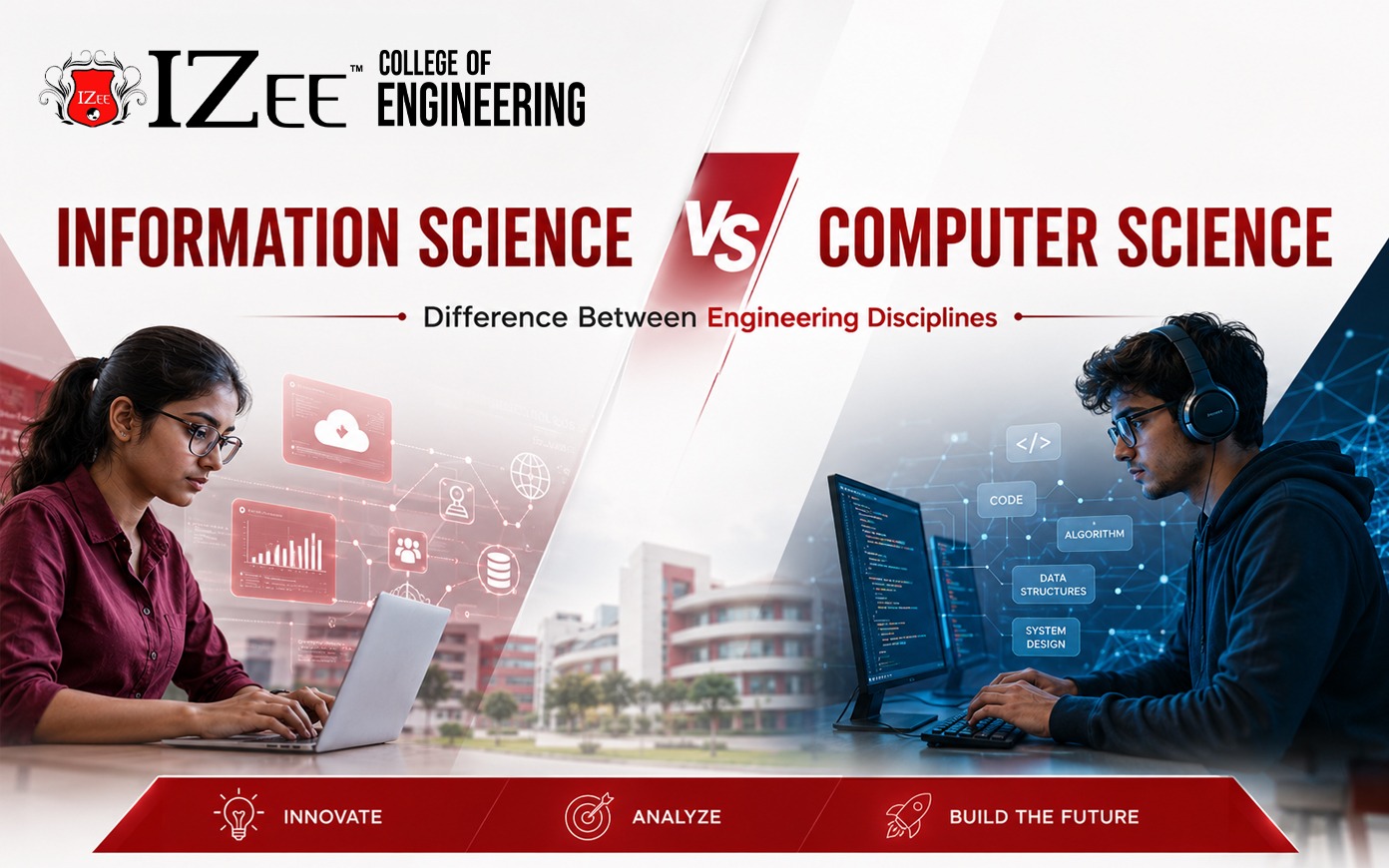
Thousands of students sit with the same engineering counselling form every year, and become stuck on two options; Information Science Engineering and Computer Science Engineering. Well-meaning family members often don’t know how to help clear the confusion, the names sound alike, and the brochures are similar. But the two branches feed engineers into two slightly different jobs in the tech industry, and when a student realizes the difference early, they can save themselves from a bad four years.
This blog details about Information Science Engineering in Bangalore and Computer Science Engineering in Bangalore, their curriculum, career options, and placement opportunities to help students and parents make informed decisions.
What Is Computer Science Engineering (CSE)?
The older and more general of the two is CSE. It emphasizes theory and mathematics behind computing, such as algorithms, data structure, operating systems, computer architecture, and software engineering. Those who opt for CSE then pursue software products, systems programming, or research-oriented fields like artificial intelligence and machine learning.
The CSE course is usually intense in fundamentals of computing theory, making it a good option for students who like a challenge in solving fundamental problems and are interested in competitive coding, product-oriented businesses, or further education.
What Is Information Science Engineering (ISE)?
ISE is more practical and a cross-disciplinary approach. In addition to programming concepts, it also focuses heavily on information systems, database management, networking, data analytics, and the use of technology to address business problems. It is at the nexus of information management and computer science.
The curriculum emphasizes the practical application of technology to business problems, making graduates from ISE well equipped for careers in data science, information security, systems analysis, and enterprise software.
Information Science Engineering vs Computer Science Engineering: Key Differences
| Aspect | CSE | ISE |
| Focus | Core computing theory and systems | Applied computing and information systems |
| Curriculum Emphasis | Algorithms, architecture, software engineering | Databases, networking, data analytics |
| Career Direction | Software development, AI/ML, systems programming | Data science, information security, systems analysis |
| Best Suited For | Students who enjoy deep technical problem-solving | Students who enjoy applying tech to business problems |
| Higher Studies Scope | Strong for M.Tech, MS in CS | Strong for MIS, data analytics, information system |
The first two years have a very large common core with both branches and the differentiation becomes more apparent in the electives and specializations available from the third year onwards.
ISE or CSE: Which Is Better?
This question gets asked every counseling season, and the truth is that neither of the two is in any way better. The decision will be based on a student’s likes and aspirations for their future.
- Select CSE if interested in writing efficient code or building software products or if interested in getting into the theory of computing in great detail.
- Opt for ISE if interested in data, information systems and technology interfacing with business processes.
For software positions, the two types are almost equal in value to the recruiters today, as the industry has shifted to a more skill-based hiring process than strictly filter by branches. The projects, internship, and skills that a student develops in college are more important than the branch name.
Placement Scope for Both Branches
IZee College of Engineering has been able to get excellent campus placements for both ISE and CSE students. Visitors from IT services, product and analytics companies come in each year and both branches qualify for recruitment drives in most cases.
Students from both ISE and CSE have got some of the highest placement packages in the college with a good foundation in their branches and hands-on experience in projects and internships. This is to make a simple point: the door is opened by the branch; the student walks through the door but how far he crosses it depends on his skills.
Conclusion
Though on the surface similar, Information Science Engineering and Computer Science Engineering are actually preparing students for a slightly different path in the tech industry. CSE is more oriented towards the core computing and the software development side of things, while ISE is more focused on the applied information systems and data-driven side of things. Here at IZee College of Engineering, both streams provide excellent exposure to industry-relevant skills, have active placement assistance and have a curriculum that keeps pace with the real industry. The right branch isn’t always the one that’s easy to identify, but the one that appeals to a student’s curiosity.
FAQs
1. Will ISE be easier than CSE?
Not necessarily. ISE doesn’t have a lighter focus. It has more applications to computing and information systems, whereas CSE delves deeper into computing theory.
2. What is the best branch to do higher studies abroad?
While CSE is more widely known for degrees such as Masters of Science in Computer Science, information systems also have programs that are good for students who have strong data or analytics abilities.
3. Is it possible for an ISE graduate to be a software developer?
Yes. ISE graduates also study programming basics and regularly end up getting job offers as software developers, particularly when they create relevant projects and internships.
4. What is the difference in salary of the ISE and CSE graduates?
Salaries are more dependent on the person’s skills, the projects, and the company, rather than on the branch itself. Both streams see similar starting packages at most colleges.